Import a Translation Package
When your translation providers have completed their work, they will return an updated translation package to you. You will need to upload that package back into Paligo, so that Paligo can add the translations to the relevant topics. It is possible to upload a zip file containing multiple files (one file per language pair) or to upload individual files.
To upload, either:
Display the publication or topic in Resource View, select the Dotted menu (...) and then choose Import Translation.
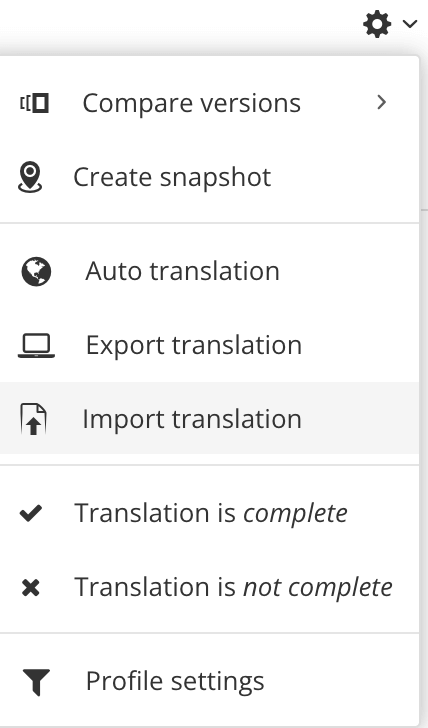
Open the publication or topic in Translation View, select the Cog and choose Import Translation. To find out more, see Working in Translation View.
If you sent images and / or variables to the translation service, these will be returned separately. They are not included in the translation package:
To import translated images, see Translate Images.
To import translated variables, see Import Translated Variable Sets.
Note
If you use one of Paligo's translation integrations, such as Phrase, you will need the translation service to notify you when the translation is complete. You can then import the translation into Paligo.
Select the
foldercontaining the topic or publication to be translated in Content Manager.
If the content is not in a folder, select the top-level folder Documents.


This will open the Resource View.
Select the Dotted menu (...) for the publication or topic.
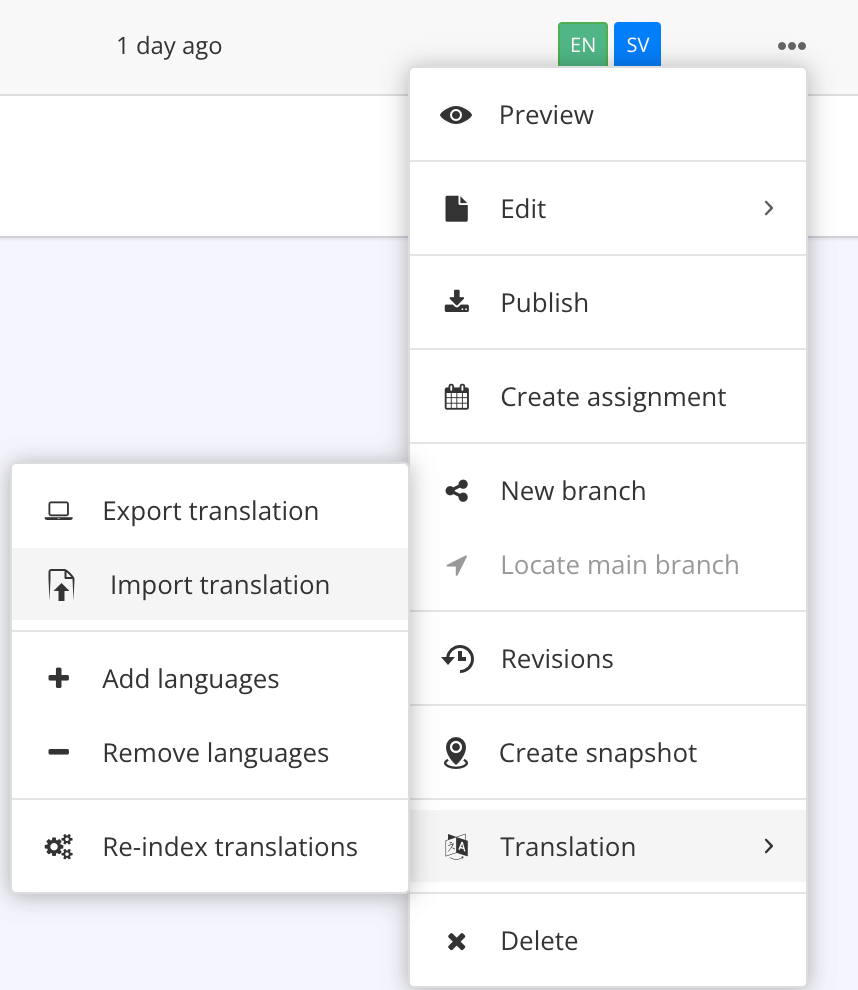
Select Import Translation.

Select an Import type:
To manually import a zip file, choose Upload file.
To import through a translation integration, choose Phrase or TransPerfect.
Note
This is only possible if the translation integration is set up correctly in Paligo, see Connect Paligo to Phrase or Connect Paligo to TransPerfect.
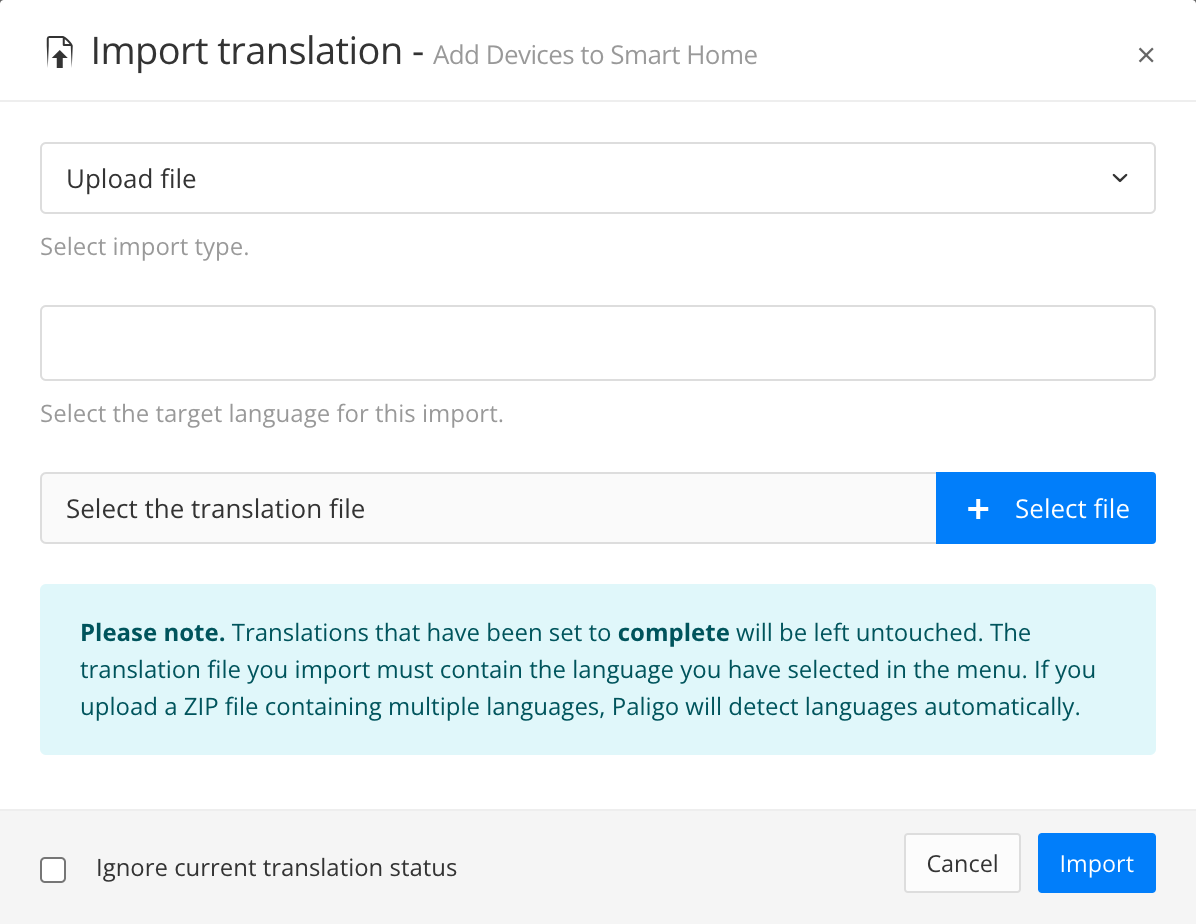
Select the target language of the content that you are going to import.

Important
You can only import the translation if the language is added to the matching publication and topic. To find out more, see Language Management.
Select a single
translation fileor a zip file with multiple languages to be imported.
Use the Ignore current translation status checkbox to control how Paligo reacts to statuses set by the translation service.
Check the box if you want Paligo to import all translations, irrespective of their translation state.
Clear the box if you want Paligo to only import expected translations. These are translations made to text fragments that have been updated in the source language since the previous translation took place.
To learn more about how Ignore current translation status affects the import, see Control what Translations are Imported.
Select Import.
Note
If you uploaded a .zip file, Paligo will ask you to check the files contained within that you want to import. Select Import again.
Paligo will import the translation into the matching publication or topic.
Important
If encountering problems during an import of a Phrase project, use the checkbox Override import project . It will force Paligo to find the missing
Phrase job IDand reconnect it with thePhrase project ID.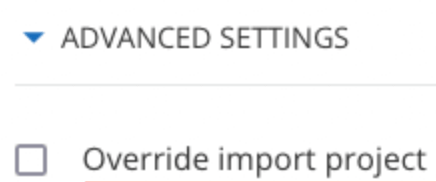
Paligo shows the Review translation import window to let you choose which translated elements you want to import.
Check all the segments you want to import, then select Import x selected.
For more information, see Translation import review.
If you imported a translated publication you will have to Re-Index Translations.
Note
You might need to refresh the page to see the upload status.
Tip
It is also possible to use the Translation View to import translation files.
Select the topic or publication to be translated in Content Manager.
Select the Dotted Menu (...) for the topic or publication.
Select Edit and choose Translate.
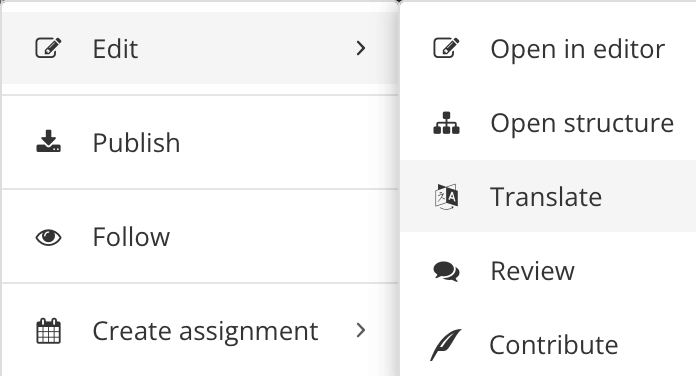
This will open the Translation View.
Select the Cog.

Select Import translation.
When content that was exported for translation was changed before the translation was imported again (translation drift), Paligo will show you which elements have changed when you import the translation file.
Note
Newly inserted elements (e.g. new paragraphs) will be marked with the Missing label.
The review window will show all segments in the current translation, color-coded to indicate their status. They will also be marked with a label saying Matched, Drifted, or Missing to indicate whether or not the segment was altered or added to the content.
Labels
Label | Description | |
|---|---|---|
| Segment that was translated, but has not changed after export. | |
| Segment that was previously translated and already imported. | |
| Segment that was translated, but for which the source was changed after export. | |
| Segment that was not translated, or a new element that was added after export. |

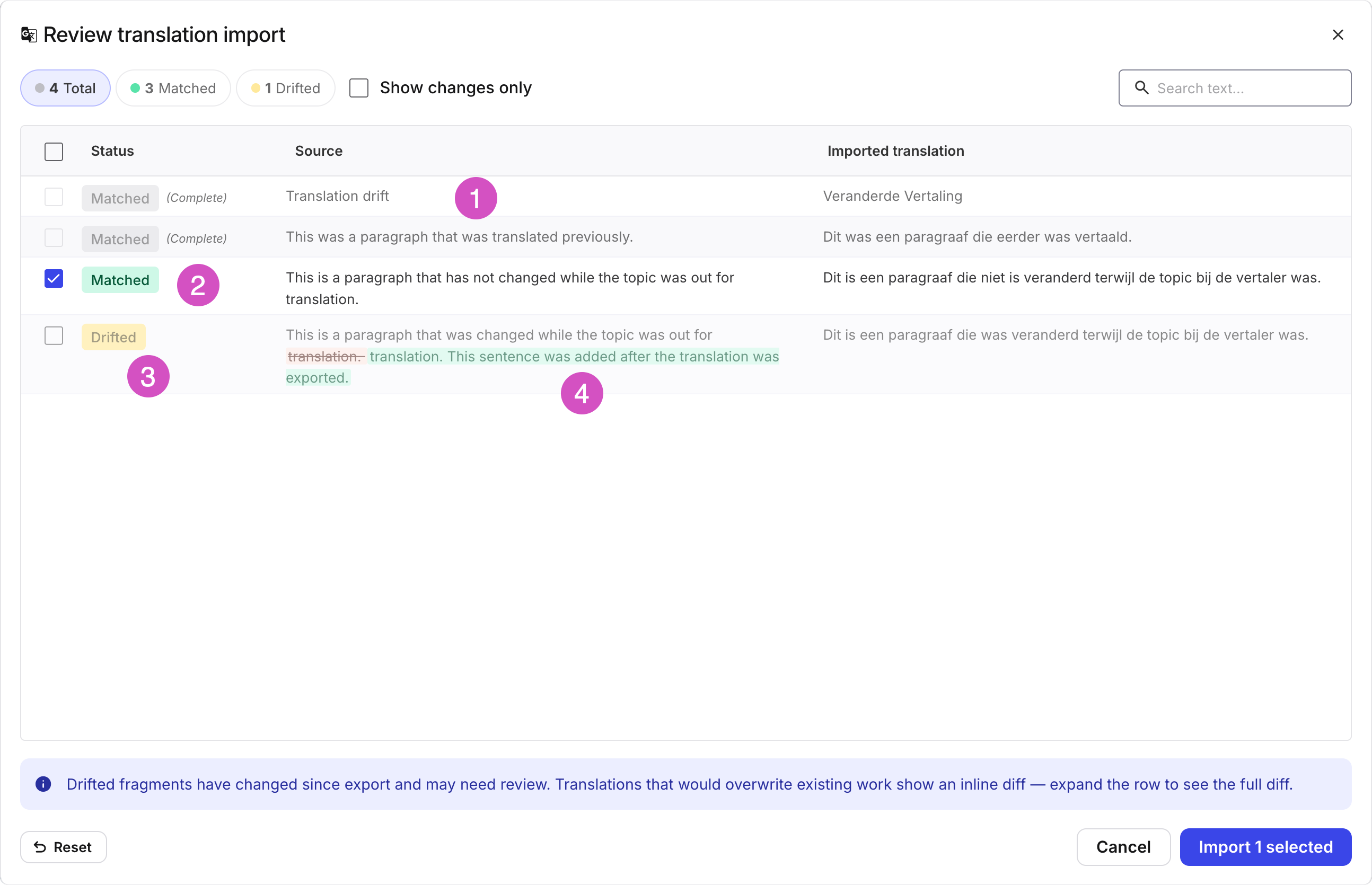
Segments that were translated previously and that have already been imported into Paligo (grayed out, with the label Matched).
Segment that has not been altered while the topic was out for translation (not color-coded, label Matched).
Segment that was altered while the topic was out for translation (label Drifted).
Deletions are shown in red, while additions are shown in green.
Upon import, the translation review window will show. The segments that have not changed since the translation was exported will be checked automatically.
Review the drifted segments and check those that you want to import anyway.
Note
You can filter the segments by status, by using the filter buttons at the top. This is especially useful when dealing with extensive translations.

Note
Use the Reset
 button to revert any changes you made in selecting segments.
Select Import x selected to import the translation.
Note
If you decide not to import the drifted segments, you will need to export the content again, and resend it for translation to have those remaining segments translated.